
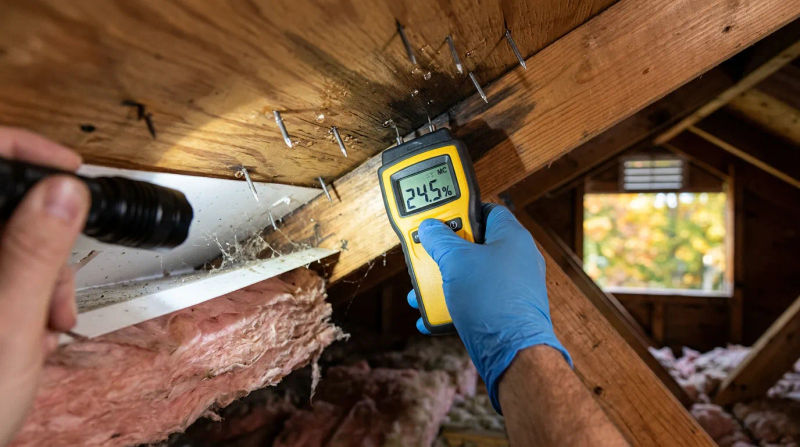
That musty, damp smell hits you the moment you pull down the attic stairs to grab some fall decorations. It’s a familiar odor, but one you’ve probably dismissed before. However, as a roofing specialist with over 15 years of experience, I can tell you that this smell is often the first warning sign of a significant problem brewing overhead. Here in Piscataway, the crisp fall air and cooler nights create the perfect storm for attic condensation, a subtle issue that can lead to serious damage if ignored. Trapped moisture can soak your insulation, promote mold growth, and even begin to rot the very structure of your roof before the first winter freeze sets in. Understanding the early attic moisture signs is your best defense against costly repairs down the road.
This guide is designed to walk you through a proper attic check-up. We’ll cover what our trained crews look for during an inspection, explain the root causes of these issues, and help you know when it’s time to call for an expert opinion.
Common Signs and Symptoms
A thorough visual check is the first step in any diagnostic process. Before winter arrives, use a powerful flashlight and this Piscataway attic inspection checklist to look for the seven key indicators of a moisture problem. Be cautious when moving around your attic; only walk on the joists or designated flooring to avoid stepping through the ceiling below.
- 1. A Persistent Musty Odor: This is your nose telling you what your eyes can't yet see. A damp, earthy, or musty smell indicates the presence of excess humidity and, often, the early stages of mold or mildew growth. Don't ignore it.
- 2. Visible Mold or Mildew: The next stage after the smell is visible growth. Look for black, white, or greenish splotches on the underside of the roof sheathing (the wood panels your shingles are nailed to), rafters, and trusses. This is a clear sign that moisture has been present for some time.
- 3. Frost or Water Droplets on Surfaces: This is a classic symptom of attic condensation in winter, but it starts in the fall. On a cool morning, look at the underside of your roof deck and check for a thin layer of frost or tiny beads of water. This happens when warm, moist air from your home rises into the cold attic and condenses on the first cold surface it touches - the roof sheathing.
- 4. Damp or Matted Insulation: Your attic insulation should be fluffy and dry. If you see areas that look compressed, clumpy, or discolored, it’s likely been saturated with moisture. Wet insulation loses its insulating properties (R-value) and becomes a breeding ground for mold. You may also see dark staining on the paper backing of fiberglass batts.
- 5. Water Stains and Drips: Look for tell-tale signs of water intrusion. This can include dark streaks on the wooden rafters, round or discolored patches on the attic floor, or drips coming from the tips of roofing nails. These stains don't always mean you have a roof leak; they are often caused by condensation building up and dripping down.
- 6. Rusted Metal Components: Moisture and metal don't mix. Check for rust on roofing nails poking through the sheathing, metal gusset plates that hold trusses together, or any HVAC ducts or straps in the attic. Rust is a definitive sign of long-term high humidity.
- 7. Soft or Darkened Roof Decking: This is one of the most serious roof deck rot symptoms. From inside the attic, look for areas of the wood sheathing that appear dark, almost black. Carefully (do not put your full weight on it) press on these areas with a tool or gloved hand. If the wood feels soft, spongy, or gives way easily, the wood has begun to decay. This compromises the structural integrity of your entire roof system and requires immediate attention.
What Causes This Problem
Identifying the symptoms is only half the battle; understanding the cause is crucial for a lasting solution. In our experience, attic moisture problems almost always stem from an imbalance in ventilation and air sealing.
Inadequate Attic Ventilation is the number one culprit. A healthy attic breathes. It needs a balanced system of intake vents (usually in the soffits or eaves) to draw in cool, dry air and exhaust vents (like a ridge vent or gable vents) to push out warm, moist air. When this flow is blocked or insufficient, humidity from your home gets trapped. Blocked soffit vents - often clogged by insulation, debris, or paint - are a very common issue we find during inspections.
Air Leaks from the Living Space are a massive contributor. Your home produces a significant amount of moisture daily through cooking, showering, and even breathing. This warm, humid air naturally rises. If there are unsealed gaps between your living space and the attic, that moisture goes straight up into the attic. Common leakage points our technicians find include:
- Around attic access hatches or pull-down stairs
- Gaps around plumbing pipes, electrical wires, and chimneys
- Unsealed recessed lighting fixtures (can lights)
- Dropped soffits or chases in kitchens and bathrooms
Improperly Vented Appliances are another frequent cause. A bathroom exhaust fan or clothes dryer vent that terminates inside the attic is a recipe for disaster. It pumps gallons of moisture directly into a space that isn't designed to handle it. All such appliances must be vented directly to the exterior of the home.
When to Call a Professional
Some initial investigation can be done by a diligent homeowner, but diagnosing and fixing attic moisture issues often requires an expert eye and specialized knowledge.
You can safely perform a visual inspection from the attic hatch or a securely floored area. Using a flashlight, you can look for the obvious signs of mold, staining, and rusted nails. This initial check can provide valuable information.
However, it's time to call a qualified professional when:
- You discover widespread mold or what you suspect are roof deck rot symptoms. These are serious issues that involve health and structural safety risks.
- You can see the signs of moisture but cannot pinpoint the source. An experienced professional can perform diagnostic tests, including smoke tests, to find hidden air leaks.
- Your attic is difficult or unsafe to access. Professionals have the right safety equipment and training to navigate tight spaces and trusses.
- You suspect your ventilation is inadequate. Calculating the correct amount and type of ventilation for your specific roof size and style is a science. An expert can assess your current system and determine if it meets building code and performance standards.
Our technicians follow a standardized, organized workflow to ensure every potential cause is investigated, from measuring airflow to identifying thermal bypasses. This ensures the correct problem is fixed the first time.
Conclusion
Your attic is an out-of-sight, out-of-mind part of your home, but its health is directly linked to the longevity of your roof and the quality of the air you breathe. The musty smells, damp insulation, and frost on the sheathing are all early warnings from your home that something is wrong. Addressing these attic moisture signs in the fall is a proactive step that can prevent the destructive cycle of attic condensation in winter and protect you from mold, wood rot, and high energy bills.
Don't wait for a water stain to appear on your bedroom ceiling. An early inspection can save you thousands in future repairs and give you peace of mind as the cold weather approaches.
If you notice any of these signs, contact a local roofing professional for an inspection.