
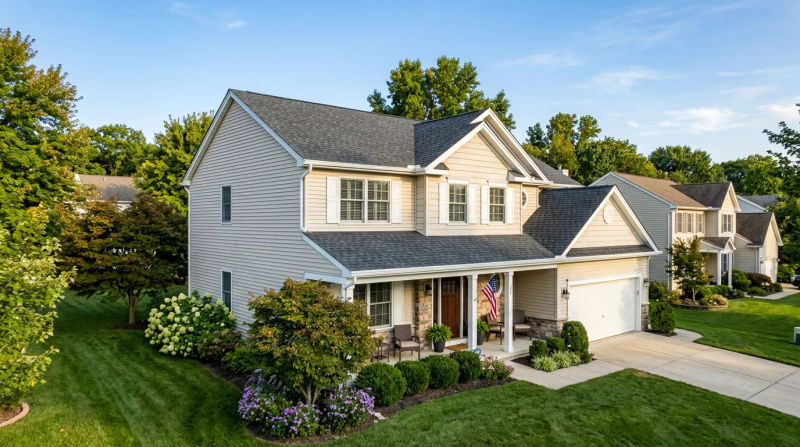
My name is Daniel R. Castillo, and as a Senior Roofing Specialist at Global roofing and paving Enterprises, I've seen firsthand how a small detail can make the difference between a secure roof and a catastrophic failure. This was never truer than on a project we undertook in Piscataway, NJ, this past September. A homeowner reached out to us for a proactive fall inspection. They were rightfully concerned about the approaching storm season - those late autumn nor’easters can bring fierce, gusty winds that test every component of a home's exterior. They wanted peace of mind, and they called Global roofing and paving Enterprises to ensure their roof was ready for whatever the weather had in store.
This call is one we appreciate getting. Too often, we're called out after the storm, when water is already staining ceilings. This homeowner’s foresight allowed us to address a critical vulnerability before it became a crisis. Their concern was simple: was their roof truly prepared for a New Jersey winter? Our inspection would soon reveal that their intuition was spot on.
The Assessment
Upon arriving at the Piscataway home, the roof looked decent from the ground. The asphalt shingles were mid-life, and there were no glaring signs of damage like missing shingles or major curling. However, my 15+ years of experience have taught me that the most critical vulnerabilities are often hidden at the edges. When our team got on the roof for a hands-on evaluation, the story changed immediately.
The primary issue was a complete failure of the roof's perimeter defense system. Here’s what we documented:
- Improperly Installed Drip Edge: The metal drip edge, which is supposed to direct water away from the fascia and prevent it from wicking back under the shingles, was installed incorrectly. In some sections, it was bent and loose; in others, it was placed on top of the starter course of shingles, rendering it almost useless for wind protection.
- Degraded Starter Strip: The starter strip - the first row of shingles installed at the eave - lacked a proper tar sealant strip. The original adhesive had dried out and failed, leaving the edges of the first shingle course unsecured. I could easily lift them with my fingers, a clear red flag for poor wind resistance.
- Evidence of Minor Wind Uplift: We observed subtle “chatter” marks and slight lifting on the first two courses of shingles along the most wind-exposed roof planes. This was a classic sign that wind had already been getting under the shingles, weakening them with every gust. This was a textbook case requiring wind uplift mitigation asphalt shingles best practices.
We explained to the homeowner that the roof edge is the front line in the battle against wind. When wind hits a house, it flows up the wall and creates immense lifting pressure right at the eaves. Without a properly installed drip edge and a securely bonded starter strip, that wind gets underneath the first course of shingles and can peel a roof back like the lid of a can. This is the single most common failure point we see. We were looking at a clear need for a Piscataway roof edge repair before the next major wind event.
Our Solution
Given the urgency of the approaching storm season, the homeowner agreed that immediate action was the right call. The team at Global roofing and paving Enterprises developed a targeted plan to harden the entire roof perimeter. This wasn't a full roof replacement, but a strategic, high-value repair that would extend the life of the entire system.
Our skilled 5-person crew was scheduled during a clear-weather window in mid-September. The project, which serves as a perfect drip edge replacement case study, was completed in just two days and followed our standardized process for quality assurance:
- Perimeter Teardown: We began by carefully removing the first three courses of asphalt shingles around the entire perimeter of the roof. This required patience and precision to avoid damaging the shingles we intended to reuse.
- Deck Inspection and Preparation: With the edge exposed, we inspected the underlying plywood sheathing for any signs of water damage or rot. Fortunately, the issue was caught early, and the decking was sound. We swept the deck clean to ensure a perfect surface for the new components.
- New Drip Edge Installation: We installed a new, heavy-gauge aluminum drip edge. Crucially, we followed proper roofing code: the drip edge was installed under the ice-and-water shield at the eaves (to let water flow over it) and over the underlayment at the rakes (to protect the fascia). Every piece was secured with galvanized, ring-shank roofing nails for maximum hold.
- High-Performance Starter Strip Installation: This was the key to improving starter strip wind resistance NJ. We used a modern, high-performance starter strip with an aggressive, factory-applied asphalt sealant. This type of strip is specifically designed to create a powerful, continuous bond with the first course of shingles, effectively sealing the edge against wind intrusion.
- Shingle Reinstallation and Sealing: We expertly re-installed the shingles we had removed, weaving them back into the existing roof field. Each shingle was nailed according to manufacturer specifications. Finally, we manually applied dabs of roofing-grade sealant to the first course of shingles to augment the starter strip's bond, providing an extra layer of protection.
Throughout the process, the Global roofing and paving Enterprises crew maintained a clean and organized worksite, using tarps to protect the homeowner’s landscaping and running a magnetic sweeper to collect any stray nails. This commitment to professionalism is a hallmark of our work.
The Results
The transformation was both functional and aesthetic. Before, the roof edge was uneven and vulnerable. After our work, the perimeter was sharp, clean, and visibly robust. The new drip edge provided a crisp, professional line, and the shingles now lay perfectly flat, fully sealed and ready for high winds.
The homeowner was thrilled, not just with the look, but with the peace of mind it provided. They received before-and-after photos from us, documenting the hidden flaws we corrected and showcasing the robust new system protecting their home. They could now head into the fall and winter confident that their roof's weakest point had become its strongest.
By investing in a targeted Piscataway roof edge repair, the homeowner avoided a much larger and more costly problem. Had they waited, a single severe windstorm could have ripped off a large section of their roof, leading to extensive water damage, an emergency tarping, and a full, unplanned roof replacement. The work performed by Global roofing and paving Enterprises was a small investment that protected a much larger one.
This project is a testament to the value of proactive maintenance. If you have any doubt about your roof's ability to withstand the next storm, don't wait for the wind to show you its weaknesses. Let the experts at Global roofing and paving Enterprises give you the security you deserve.
Ready for your own Global roofing and paving Enterprises experience? Contact us today for a free inspection.