
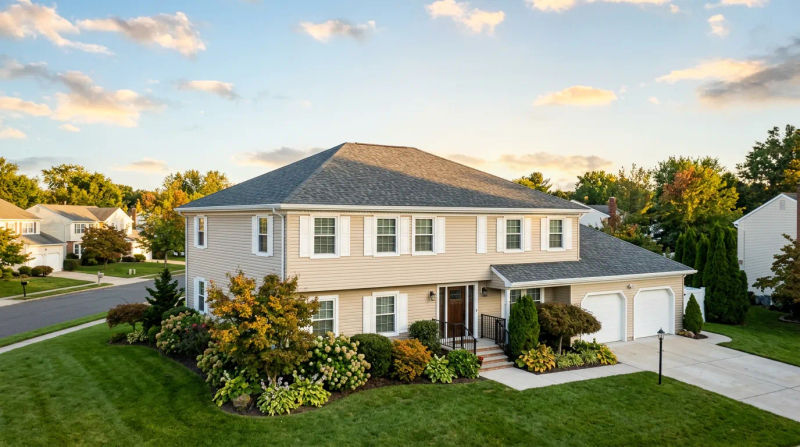
As a Senior Roofing Specialist with Global roofing and paving Enterprises, I’ve seen firsthand how the charming post-war homes in New Jersey can hide some serious performance issues. This was exactly the case when we received a call in early September from a homeowner in Piscataway. For years, they had been fighting a losing battle with severe ice dams every winter. They described the familiar, frustrating cycle: heavy snow, followed by the appearance of thick, destructive ridges of ice along their eaves, leading to water backing up under the shingles and causing stains on their interior ceilings.
The home, a classic 1.5-story Cape Cod built in the late 1940s, was characteristic of the neighborhood. These homes were built for practicality, but often without modern ventilation principles in mind. The homeowner had tried everything from roof rakes to heated cables, but these were just temporary fixes for a much deeper problem. They were looking for a permanent solution for ice dam prevention and contacted Global roofing and paving Enterprises for a professional assessment before another winter arrived.
The Assessment
When my team and I arrived at the Piscataway property, the signs of past battles were evident. We saw water staining on the fascia boards and soffits, and some of the lower courses of shingles were curled and degraded from constant moisture exposure. The gutters showed slight warping, a clear sign of the immense weight from ice buildup. These were the symptoms, but the real cause was hidden in the attic.
Climbing into the attic felt like stepping into an oven, even on a mild September day. This trapped heat was the primary culprit. The insulation, likely a mix of original and haphazardly added material over the years, was compressed and packed tightly against the roof deck at the eaves. This completely blocked any potential airflow from the soffits. Furthermore, the only exhaust ventilation for the entire attic was a single, undersized gable vent at one end of the house. It was simply not enough to move the volume of air necessary to keep the attic cool.
This combination created the perfect storm for ice dams. Here’s the science: during the winter, heat from the living spaces below rises into the poorly ventilated attic. This super-heated air warms the underside of the roof deck, melting the snow on the roof from the bottom up. The meltwater runs down the roof until it reaches the cold eaves, which are not heated by the attic. There, it refreezes, forming a small dam. This process repeats, with the dam growing larger and larger, trapping a pool of water behind it that eventually seeps under the shingles and into the home. Our assessment confirmed that a comprehensive ventilation upgrade for ice dams in NJ was not just recommended; it was essential to protect the home's structural integrity.
Our Solution
After walking the homeowner through our findings and explaining the dynamics of attic airflow, we proposed a complete ventilation overhaul. Our plan wasn't just to add more vents; it was to create a balanced, passive system that would work continuously to keep the attic cool and dry. The team at Global roofing and paving Enterprises has a standardized, highly effective process for this exact scenario.
The project was broken down into two main phases, executed by our specialized 3-person crew over three days.
Phase 1: Establishing Proper Air Intake
The first step was to give the attic the ability to breathe in. Our crew worked meticulously at the eaves from inside the attic. We pulled back the existing insulation and performed a soffit vent baffle retrofit. Baffles are simple but critical components - they are plastic or foam channels that install against the roof deck, creating a clear airway for outside air to enter from the soffits without being blocked by insulation. This is a key service we provide throughout Middlesex County to ensure long-term ventilation performance.
Once the baffles were in place, we moved to the exterior to install continuous soffit vents. These provide a significant increase in Net Free Area (NFA) - the measurement of a vent's capacity for airflow - compared to the non-existent intake the home had before. We then carefully placed the insulation back, ensuring it met the baffles but didn't obstruct the new airway.
Phase 2: Creating Powerful, Passive Exhaust
With a robust intake system established, we needed to give the hot, moist air a place to escape. The single gable vent was decommissioned and sealed. In its place, we opted for a much more effective solution: a ridge vent install in Piscataway. Our technicians cut a precise slot along the entire peak of the roof's ridge. We then installed a modern, shingle-over ridge vent. This type of vent blends seamlessly with the roofline while creating a powerful vacuum effect. As wind blows over the ridge, it draws warm air out of the attic, pulling cool, dry air in through the new soffit vents. This creates a constant, gentle flow of air that keeps the entire roof deck cool.
At Global roofing and paving Enterprises, we don't guess. We calculated the attic's square footage and applied the 1/300 rule to ensure the NFA of the new intake vents was perfectly balanced with the NFA of the new exhaust vent. This balance is critical for preventing weather infiltration and ensuring the system functions as designed.
The Results
The transformation was immediate and profound. Even as we were finishing the job, you could feel a noticeable difference in the attic. A slight, consistent breeze was present, and the oppressive heat was gone. We had effectively turned a stagnant hotbox into a dynamic, breathing part of the home's protective envelope.
Before our work, the attic was a liability, actively working against the home by creating destructive ice dams. After our ventilation upgrade, the attic became an asset. The new system ensures the roof deck temperature stays much closer to the outdoor temperature. This prevents snow from melting due to heat loss, which is the root cause of ice dams. The homeowner no longer needs to worry about water damage, ruined insulation, or costly interior repairs every winter.
We provided the homeowner with before-and-after photos, documenting the clogged soffits and the single ineffective vent, and contrasting them with the new, clear airways created by the baffles and the continuous airflow of the ridge vent system. They were thrilled not just with the quality of the work from Global roofing and paving Enterprises, but with the peace of mind that came with a permanent, scientifically-backed solution. They were finally ready for winter.
This project is a perfect example of how Global roofing and paving Enterprises approaches roofing and ventilation challenges. We diagnose the root cause, develop a comprehensive plan based on building science, and execute it with precision and expertise.
Ready for your own Global roofing and paving Enterprises experience? Contact us today for a free inspection.