

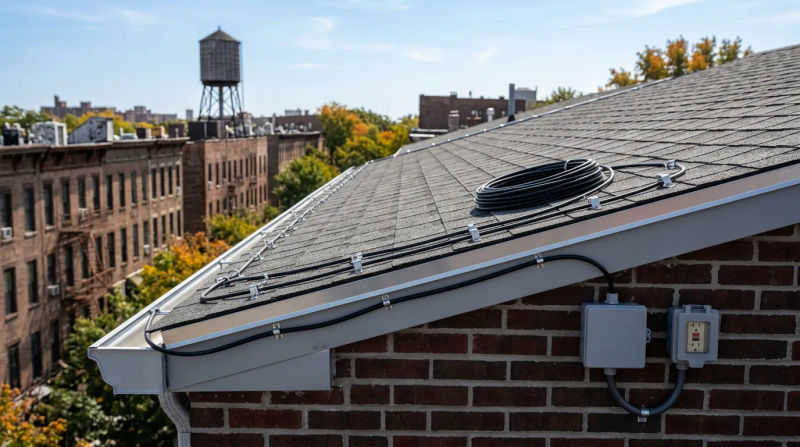
As a Senior Roofing Specialist with over 15 years of experience working on homes across The Bronx, I know that winter preparation is a topic many homeowners put off. But when it comes to protecting your property, proactive measures are always less stressful and less expensive than emergency repairs. One of the most common questions I get each fall is about the heat cable installation cost. It's a top concern, and rightly so. You need to know what to budget for an effective system that prevents damaging ice dams.
This guide is designed to give you a transparent, no-nonsense look at the pricing for roof de-icing systems in our area. We'll break down the numbers, explore the factors that influence the final price, and empower you with the right questions to ask any contractor. With the freeze-thaw cycles often starting in late fall here in The Bronx, September is the perfect time to get this work scheduled, ensuring your home is protected before the first hard freeze creates ice buildup in your gutters and on your eaves.
Average Costs in The Bronx
When budgeting for roof de-icing cables, it's helpful to think in terms of both project scope and cost per linear foot. While a DIY kit from a big-box store might seem tempting at $100 to $300, I strongly caution against it. Professional installation is critical for both safety and effectiveness, especially on the historic pre-1940s rowhouses and brownstones common in our neighborhoods. Improper wiring is a fire hazard, and incorrect placement will fail to prevent ice dams.
For a professional installation by a trained and insured crew, here are some realistic price ranges you can expect:
- Cost Per Linear Foot: The average professional roof de-icing cable price Bronx NY typically falls between $20 and $35 per linear foot. This price includes the cable itself, clips, and the labor to install it.
- Typical Small Project (e.g., front of a Rowhouse): For a standard 20-foot wide Bronx rowhouse requiring 60-100 linear feet of cable along the front cornice, gutter, and downspout, you can expect a cost in the range of $1,500 to $3,500. This often includes a simple electrical connection.
- Larger or More Complex Projects: For larger homes, properties with complex rooflines, or installations that require extensive electrical work, the cost can range from $3,500 to $6,000+. This might cover multiple roof sections, valleys, and several downspouts.
It's important to remember that these are baseline estimates. The final electric gutter heat tape cost Bronx depends on several unique factors specific to your property.
Factors That Affect Price
The price on a proposal is never arbitrary. At our company, we base our estimates on a standardized process that accounts for the specific challenges and requirements of each job. Here are the primary drivers behind the cost.
- Linear Footage Required: This is the most straightforward factor. The more linear feet of roof edge, valleys, and downspouts that need protection, the more material and labor are required.
- Electrical Access and Requirements: This is a major variable. For a heat cable system to be safe and code-compliant, it must be plugged into a GFCI-protected (Ground Fault Circuit Interrupter) outdoor outlet. If you don't have one conveniently located, an electrician must install a new dedicated circuit and outlet. This can add $400 to over $1,000 to the total project cost, depending on the complexity.
- Type of Cable Used:
- Constant Wattage Cables: These are less expensive upfront but consume the same amount of energy whether it's 30°F or -5°F. They have a shorter lifespan.
- Self-Regulating Cables: This is what our technicians almost always recommend. These professional-grade cables automatically adjust their heat output based on the ambient temperature. They use less energy, have a much longer lifespan, and provide more reliable ice dam prevention cables NYC. The upfront material cost is higher, but the long-term value is significantly better.
- Roof Accessibility and Complexity: Working on a steep-pitched roof or a multi-story brownstone with limited access requires more extensive safety equipment and labor, increasing the cost. The beautiful, ornate cornices and parapet walls on pre-war buildings in The Bronx require meticulous work to attach clips without causing damage to the historic structure.
- Condition of Gutters and Roof Edge: Heat cables won't work if your gutters are full of leaves and debris. We always perform a thorough cleaning before installation. If we discover damaged gutters, fascia, or shingles during our inspection, those repairs must be addressed first, which would be a separate cost.
- Labor and Expertise: A professional company invests in training, insurance, and efficient workflows. While this contributes to the cost, it also ensures the job is done right, safely, and to code. You're paying for reliability and peace of mind.
How to Get the Best Value
Getting the best value isn't about finding the cheapest price; it's about making a smart, long-term investment in protecting your home. A poorly installed system is a waste of money and can be a serious hazard.
- Schedule in the Off-Season: Don't wait for the first icicle to form. By scheduling your heat cable installation cost assessment in September or October, you avoid the emergency rush. Our schedule is more flexible, and you'll have the system in place long before you need it.
- Invest in Self-Regulating Cables: The energy savings and extended lifespan of self-regulating cables provide a superior return on investment compared to cheaper, constant-wattage alternatives.
- Bundle Services: If you're having heat cables installed, it's the perfect time to get your gutters professionally cleaned and your roof inspected. Combining these services in a single visit is more efficient and can save you money compared to scheduling them separately.
- Prioritize Professional Installation: A system installed by a trained crew is not only safer but also more effective. Our technicians understand the precise patterns needed to create clear drainage channels for melting snow and ice, ensuring the system performs as intended.
Questions to Ask Your Contractor
To ensure you're hiring a qualified professional, you need to ask the right questions. Any reputable contractor will be happy to provide clear answers.
- Are you fully licensed and insured to perform roofing and electrical work in New York City?
- What type of cable do you recommend for my home, and why? (They should be able to explain the benefits of self-regulating vs. constant wattage.)
- Does your estimate include the installation of a new GFCI outlet if required? If not, is that a service you coordinate?
- How will you attach the clips and cables to my roof without causing damage? (This is especially important for slate, tile, or historic materials.)
- What is the warranty on the cable materials and your installation workmanship?
- Can you explain the layout you plan to use on my roof's specific problem areas (e.g., valleys, eaves, downspouts)?
Having spent years diagnosing leaks caused by ice dams, I can't overstate the value of a properly installed de-icing system. It's a proactive investment that safeguards your roof, attic, and interior walls from the kind of water damage that leads to costly and disruptive repairs. By understanding the costs and asking the right questions, you can make a confident decision that protects your home for many winters to come.
For a personalized estimate and a detailed roof inspection in The Bronx, contact All In One Home Repair for a free consultation. Our team can provide a site-specific quote after evaluating your roof edge, gutter system, and electrical access.