
That new, faint discoloration on the ceiling around your skylight might seem insignificant at first. You might even dismiss it as a shadow or a trick of the light. But after another one of those intense September storms we see in Jersey City, you notice it’s slightly larger, maybe a bit darker. This is often the first quiet warning that a small issue is growing. The transition from intense summer heat, which can cause materials to expand and contract, to the cooler, wetter days of fall is a critical time for roofs. Small gaps that formed over the summer are now being tested by wind-driven rain, and a tiny flaw can quickly become a significant leak.
As a roofing specialist with over 15 years of experience diagnosing leaks, I've seen how even the smallest skylight leak signs can point to a developing problem. Understanding these clues is the first step in protecting your home from costly water damage.
Common Signs and Symptoms
Identifying a skylight leak early can save you thousands in repairs to your roof structure, insulation, drywall, and belongings. Our technicians are trained to spot these indicators during routine inspections. Here are the most common signs you should look for:
- Visible Water Stains: This is the classic sign. You'll typically see yellowish or brownish rings on the ceiling or walls surrounding the skylight. These water stains around the skylight frame are definitive proof that water has penetrated your home's interior.
- Active Dripping: During or immediately after rainfall, seeing water actively dripping from the skylight is an undeniable sign of a leak that requires immediate attention.
- Peeling Paint or Bubbling Drywall: Long before you see a stain, chronic moisture can cause the paint to bubble, flake, or peel. The drywall itself may feel soft or look swollen.
- A Musty or Earthy Odor: If you notice a persistent musty smell in the room with the skylight, it could indicate hidden mold or mildew growth within the ceiling or wall cavity caused by a slow, undetected leak.
- Condensation Between Glass Panes: While some condensation on the interior surface of the glass can be normal due to humidity, fogging or moisture trapped between the panes of a double-paned skylight is a major red flag. This indicates the airtight seal of the glass unit has failed.
- Visible Damage to the Skylight Itself: From the outside, look for cracked glass, a warped frame, or deteriorated rubber gaskets around the edge of the glass. Any physical damage compromises the unit's integrity.
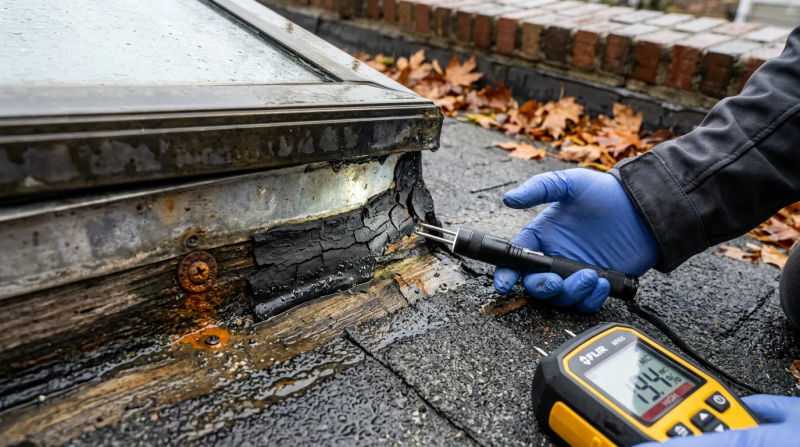
- Cracked or Deteriorated Flashing: The metal strips (flashing) that integrate the skylight into the roof are a primary line of defense. If you can safely see your roof, look for flashing that is rusted, cracked, bent, or pulling away from the skylight or the roof.
- Drafts or Audible Whistling: On a windy day, can you feel a draft or hear a whistling sound near the skylight? Air can pass through gaps that will eventually allow water in. Jersey City’s coastal winds are notorious for finding these small weaknesses.
- Damaged Shingles or Roofing Around the Unit: Look for missing, cracked, or curled shingles immediately surrounding the skylight curb. Damaged roofing material can create a direct path for water to get underneath and attack the skylight's seals.
What Causes This Problem
Understanding the root cause of a leak is essential for a lasting repair. A proper Jersey City skylight leak detection process goes beyond simply patching the symptom; it identifies and corrects the source. Here are the most common culprits we encounter.
1. Flashing Failure This is, by far, the most frequent cause of skylight leaks. Flashing is the custom-fitted metal system that channels water away from the skylight and down the roof. It can fail due to:
- Age: Over time, sealants dry out and metal can corrode or contract, creating gaps.
- Improper Installation: Installing flashing is a precise skill. If it's not layered correctly with the roofing material and ice-and-water shield, it will inevitably leak.
- Storm Damage: The strong, wind-driven rain we experience along the coast can force water uphill and underneath flashing that isn't perfectly sealed, or high winds can lift and bend the metal itself.
2. Seal Degradation The skylight unit itself has seals and gaskets. The frame is sealed to the glass, and the entire unit is sealed to the roof deck. UV radiation and years of thermal expansion and contraction cause these materials to become brittle and crack, breaking the waterproof barrier.
3. Distinguishing a Roof Seal vs. Glass Leak It's crucial to determine if the leak originates from the roofing system or the skylight unit itself. This is a key diagnostic step.
- A roof seal leak is caused by failed flashing or compromised roofing material around the skylight's curb. Water enters at the intersection of the roof and the skylight.
- A glass leak (or frame leak) is caused by a failure of the skylight unit. This could be a cracked pane or, more commonly, a failed seal between the glass and its frame. Condensation between the panes is a telltale sign of this type of failure.
4. Issues with Older Construction In many Jersey City neighborhoods, we work on pre-1940s rowhouses. These beautiful brick and brownstone buildings, with their mix of flat and mansard roofs, present unique challenges. Decades of settling can shift the roof deck, putting stress on an older skylight installation. Furthermore, integrating a modern skylight into a historic roof system requires specialized techniques to ensure the flashing and sealing are compatible with the original construction materials.
5. Condensation Problems Sometimes, what appears to be a leak is actually a severe condensation issue. High indoor humidity can cause moisture to collect on the cold surface of the skylight and drip down, mimicking a leak. While this isn't a roof leak, it can still cause water damage and may indicate poor ventilation or an improperly insulated skylight shaft.
When to Call a Professional
While identifying the skylight leak signs is something a homeowner can do, performing the diagnosis and repair is a job best left to trained professionals. Working on a roof, especially a sloped or multi-story one, is inherently dangerous. Furthermore, an incorrect repair can often make the problem worse.
When you call an experienced professional, here is what the process should look like:
- Interior Assessment: A technician will first examine the interior damage to understand the extent and pattern of the leak. This helps provide clues about the leak's severity and potential location.
- Thorough Roof Inspection: The real work happens on the roof. Our crews perform a systematic inspection of the entire skylight area. We check the flashing, the seals, the condition of the skylight itself, and the surrounding roofing materials. We look for the subtle signs of water intrusion that an untrained eye would miss.
- Water Testing: To confirm the exact point of entry, we often perform a controlled water test. By isolating different areas - the flashing, the glass seal, the upslope shingles - and applying water, we can replicate the leak and pinpoint its origin with certainty. This eliminates guesswork and ensures we fix the right problem the first time.
Tracing a leak on a roof in Jersey City is rarely straightforward. Wind can push water sideways under shingles, meaning a leak that shows up on the east side of your skylight frame might originate from a failed seal on the west side of the roof. This is where experience matters.
Conclusion
A leaking skylight is more than a minor annoyance; it's a threat to the structural integrity of your roof and the health of your home's interior. The earliest signs, like small water stains around the skylight frame or peeling paint, are your cue to take action. Waiting until you have an active drip during a storm often means the hidden damage is already extensive.
By understanding the difference between a roof seal vs. glass leak and recognizing the common causes, you are better equipped to protect your investment. With the fall storm season upon us, now is the perfect time to address any concerns before winter weather sets in and makes repairs more difficult.
If you notice any of these signs, contact a local roofing professional for an inspection. An expert diagnosis can provide peace of mind and a clear path to a durable, long-lasting repair.