
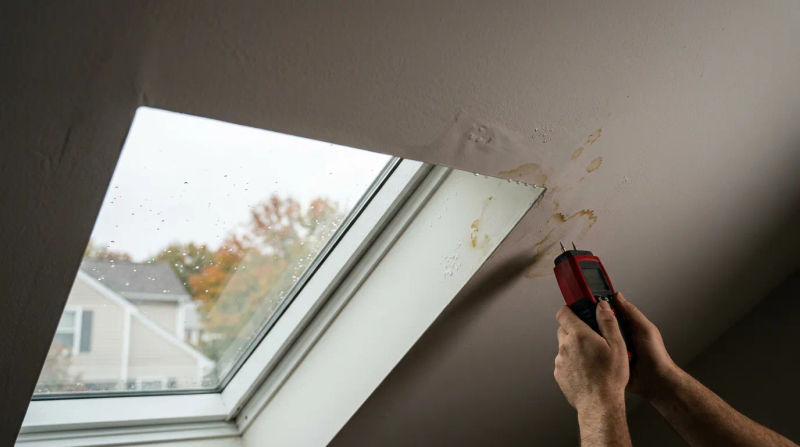
That faint, discolored spot on the ceiling around your skylight might seem insignificant at first. You might dismiss it as a shadow or an old stain you’ve just never noticed. But after a heavy October rain, you see it again, maybe a little darker this time. Here in Middlesex, the sharp temperature swings of autumn can be tough on a home’s exterior. As we prepare for winter, those minor issues can quickly become major headaches. A small gap around a skylight frame can expand and contract with the changing temperatures, turning a tiny seep into a persistent leak that damages drywall, insulation, and even structural framing.
As a specialist who has spent over 15 years diagnosing roofing issues, I’ve seen firsthand how a small skylight leak, left unaddressed, can lead to costly repairs. Understanding the early warning signs is the first step in protecting your home.
Common Signs and Symptoms
Identifying a problem early is critical. When our technicians perform Middlesex skylight leak detection, they are trained to look for a specific set of indicators, many of which you can spot yourself from inside your home. Pay close attention to these common skylight leak signs:
- Visible Water Stains: This is the most classic sign. You may notice yellow or brown discoloration on the ceiling or walls surrounding the skylight. These water stains around skylight after rain are a definitive signal that moisture is getting in somewhere it shouldn’t.
- Dripping or Puddles: An active drip is an undeniable emergency. If you see water actively coming in during a storm, or find puddles on the floor beneath the skylight, the breach is significant.
- Peeling Paint or Bubbling Drywall: Long before a drip appears, moisture can saturate the drywall or plaster around the skylight well. This will often cause the paint to bubble, flake, or peel. The drywall itself may feel soft or spongy to the touch.
- Mold or Mildew: Where there is persistent moisture, mold is sure to follow. Dark spots (black or green) or a musty odor emanating from the skylight area are clear signs of a long-term water intrusion problem that requires immediate attention.
- Fogging or Condensation: This is where things can get tricky. If you see fog or moisture droplets between the panes of glass, it means the skylight’s seal has failed and the inert gas has escaped. While this compromises the unit's insulating properties, it is not a roof leak. Moisture on the interior surface of the glass, however, could be condensation or a sign of a leak. We will explore this distinction further.
What Causes This Problem
A skylight isn't just a window; it's a complex component integrated directly into your roofing system. A failure at any point in this system can result in a leak. Based on our extensive field experience, the causes almost always trace back to one of these core issues.
- Degraded or Improperly Installed Flashing: Flashing is the series of metal pieces that waterproof the seam where the skylight frame meets the roof deck. This is, by far, the most common point of failure. Over time, exposure to the elements can cause the flashing's sealant to break down. Temperature fluctuations cause the metal and surrounding materials to expand and contract at different rates, opening up tiny gaps. Many homes in the Middlesex area, such as the classic 1940s Cape Cods, have steep roofs that require very specific flashing techniques. If the original installation wasn't executed perfectly for that roof pitch, problems are almost guaranteed to arise eventually.
- Worn-Out Seals and Gaskets: The skylight itself has weather seals around the glass and in the frame. UV rays, heat, and cold will cause these rubber or silicone components to become brittle and crack over many years, allowing water to seep past the glass.
- The skylight condensation vs roof leak Dilemma: This is a frequent source of confusion for homeowners, especially as the weather gets colder and we seal our homes for winter. Condensation occurs when warm, moist indoor air comes into contact with the cold surface of the skylight glass. The moisture in the air condenses into water droplets, which can then drip down, mimicking a leak. To tell the difference, check if the moisture is only on the interior glass surface and can be wiped away. If the surrounding drywall is wet, or if the water appears even when it's not raining, you likely have a true leak from the roof. High indoor humidity is the cause of condensation, not a roofing failure.
- Ice Dam Formation: In the winter, snow on the roof can melt and refreeze at the eaves, creating a dam of ice. Water backing up behind this dam can be forced up under shingles and find its way through the skylight's flashing system. This is a roofing system issue that often presents as a skylight leak.
- Cracks in the Skylight Pane: Though less common, a direct impact from a falling branch or large hail can crack the glass or acrylic dome of the skylight, creating an obvious entry point for water.
When to Call a Professional
While identifying the signs of a leak is a good first step, diagnosing the precise cause and performing a lasting repair is a job for experienced professionals. Attempting a DIY repair with caulk or sealant often fails to address the root cause and can sometimes make a professional repair more complicated down the line.
Here’s when you should contact a qualified expert:
- You See Any Staining or Drywall Damage: Any visible interior damage means water has already breached the roofing system. A professional needs to trace the path of the water from the outside to find the entry point, which may not be immediately obvious.
- You Suspect Flashing Failure: Diagnosing and repairing flashing is a technical skill. It requires working safely on a roof - especially the steep pitches common to post-war homes in the area - and understanding how to integrate new materials with the existing roofing system to create a permanent, watertight seal.
- The Source Isn't Clear: If you can't confidently determine whether you have a leak or a condensation problem, an expert evaluation is the best course of action. Our technicians follow a standardized diagnostic process to pinpoint the exact cause, saving you from unnecessary repairs.
- You Notice Damage from the Ground: If you can see cracked glass, bent metal flashing, or loose shingles around your skylight from the ground, it's time to schedule an inspection.
Conclusion
Your skylight is a wonderful feature that adds natural light and value to your home, but it is also a penetration in your roof that requires a perfect seal to function correctly. Paying attention to small changes like minor discoloration or peeling paint can help you catch a developing leak before it causes widespread damage. While condensation can be managed by controlling indoor humidity, any sign of a true leak - especially water stains around skylight after rain - is a clear signal that your roofing system needs attention.
Don't wait for a small stain to become a running drip. Addressing the issue early protects your home’s structure, prevents mold growth, and is far more cost-effective than dealing with a major interior repair down the road.
If you notice any of these signs, contact a local roofing professional for an inspection.